
Germany Country Facts for Expats
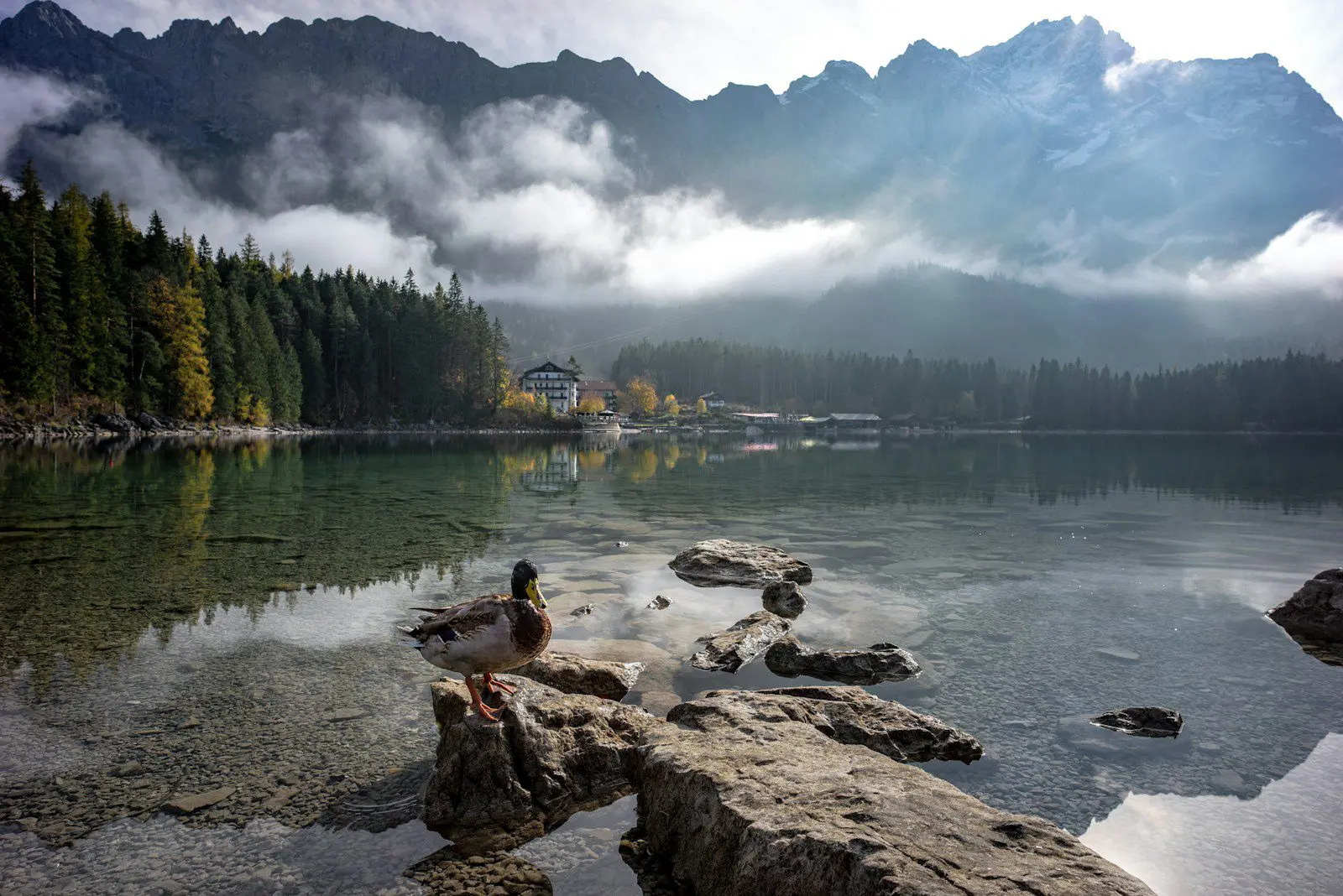
Germany, a country at the heart of Europe, is known for its rich history, economic strength, and contributions to arts, science, and technology. This guide covers Germany’s geography, demographics, economy, and culture, along with the practical realities of settling in as an expat.
Geography and Climate of Germany
Total Area: Germany spans roughly 357,022 square kilometers, featuring diverse landscapes from the Bavarian Alps in the south to the North Sea coastline in the north.
Rivers: The country is traversed by major rivers including the Rhine, Danube, and Elbe, which play significant roles in commerce, culture, and recreation.
Autobahn: The Autobahn network, well known for the stretches without a posted speed limit, extends over 13,000 kilometers, connecting cities across the country.
Airports: Frankfurt Airport is among the busiest in the world and serves as a major global hub, with tens of millions of passengers passing through annually.
How is Germany Governed?
Germany operates as a federal parliamentary republic, balancing power between the federal government and its 16 states (Länder). The President is largely a ceremonial head of state, while the Chancellor, as head of government, holds executive power and is responsible for policy and government operations.
The Bundestag (the lower house of parliament) and the Bundesrat (the upper house, representing the states) form the legislative branch, with Bundestag members elected through a mixed-member proportional representation system. The Federal Constitutional Court oversees the constitutionality of laws, giving Germany a governance structure that combines federal oversight with meaningful regional autonomy.
What are the Demographics of Germany?
Population: Germany is home to approximately 83 million people, making it the most populous country in the European Union.
Cities: The capital, Berlin, has a population of over 3.6 million, while Hamburg, Munich, and Cologne are also major urban centers with significant expat communities.
Germany’s population includes a substantial number of immigrants and a growing proportion of older citizens, reflecting broader European trends in aging and migration. The country continues to face demographic pressures from a declining birth rate and workforce shortages in several sectors.
History of Germany
The German region, originally home to various Germanic tribes, became a central part of the Holy Roman Empire during the Middle Ages, a loose confederation of territories across Central Europe. The 19th century saw the rise of Prussian power, culminating in the unification of the German states under Prussian leadership in 1871 and the establishment of the German Empire.
The 20th century brought profound upheaval, including two world wars. Defeat in the First World War led to economic turmoil and the rise of Nazism, culminating in the Second World War and the Holocaust. Post-war Germany was divided into East and West, a division symbolized by the Berlin Wall and the wider ideological split of the Cold War.
Reunification in 1990 marked a new era, and Germany has since become one of Europe’s leading economic powers and a strong advocate for European integration. Today, it remains a significant contributor to global arts, science, and philosophy, alongside its role in international affairs.
What is the Economy of Germany Like?
GDP: Germany has one of the largest economies in the world, and consistently ranks as the largest in Europe.
Exports: Germany is one of the world’s leading export nations, with automobiles, machinery, and chemical products among its key sectors.
Renewable Energy: Germany has set ambitious targets for renewable electricity generation as part of its broader transition to sustainable energy.
National Parks: The country protects its natural heritage through 16 national parks, along with numerous nature reserves and biosphere reserves spanning alpine, coastal, and lowland ecosystems.
International Health Insurance
Health insurance is a legal requirement in Germany, and it’s needed to secure your visa as well as to access healthcare once you arrive. Expats generally fall into either the public system (gesetzliche Krankenversicherung) or the private system (private Krankenversicherung), and which one applies to you depends on factors like income level and employment status. International health insurance is often essential in the period before you’re registered and enrolled in the German system. Visit our Germany international health insurance page to explore your options.
What is German Culture Like?
– UNESCO World Heritage Sites: Germany boasts 51 UNESCO World Heritage Sites, encompassing medieval castles, historical towns, and natural landscapes like the Wadden Sea.
– Beer Consumption: Germany is renowned for its beer culture, with an annual consumption of about 95 liters per capita, and hosts the world-famous Oktoberfest in Munich.
– Nobel Laureates: Over 80 Nobel Prize winners are from Germany, with significant contributions in Physics, Chemistry, Medicine, and Literature.
– Research Institutions: Germany is home to prestigious research organizations like the Max Planck Society and the Fraunhofer Society, emphasizing its commitment to scientific and technological innovation.
What are the Challenges for Germany?
Over the coming decade, Germany faces a range of economic, social, environmental, and political challenges. Economically, the country is navigating the effects of globalization, technological change, and the shift to a digital economy, alongside an aging workforce and emerging labor shortages in key industries. This demographic shift is placing growing strain on public pensions and healthcare systems, and will likely require further reform to remain sustainable.
Socially, Germany continues to work through the integration of a significant immigrant and refugee population, with social cohesion and equal opportunity as ongoing priorities. Environmentally, the country is pursuing ambitious climate goals and a transition to renewable energy, both of which require sustained investment in green technology and infrastructure.
Politically, rising polarization presents a challenge to consensus-building at home, while Germany’s role as a leading EU member state means continuing to navigate European integration and shifting global relations. Addressing these challenges will require coordinated policy, social consensus, and ongoing international cooperation.
Request a quote for international health insurance today! Comprehensive coverage for peace of mind in Germany