
Singapore Country Facts for Expats
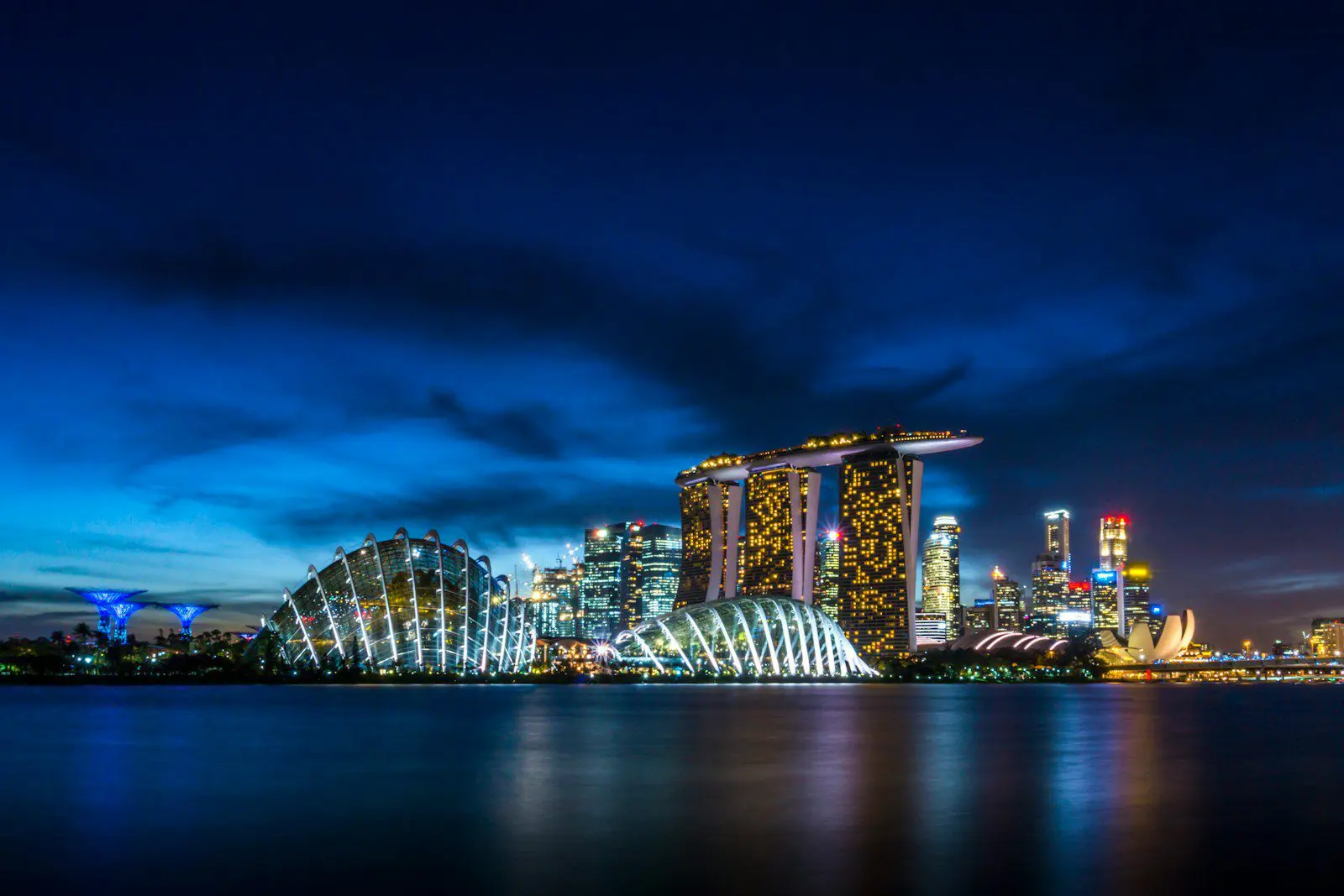
Singapore stands as a vibrant city-state and island country in Southeast Asia, earning global recognition for its multicultural tapestry and advanced economy. Sitting strategically at the southern tip of the Malay Peninsula, its location makes it a global hub for finance, trade, and transportation, home to one of the world’s busiest ports.
After the Second World War, Singapore gained independence, passing through Japanese occupation and British and Malaysian administration before emerging as a fully independent state. The nation underwent a remarkable transformation from colonial outpost to flourishing independent republic, and experts recognise Singapore as one of the “Four Asian Tigers” thanks to its rapid economic growth.
Approximately 5.7 million people call Singapore home, with a diverse population including Chinese, Malay, Indian, and expatriate communities that contribute to a rich cultural landscape spanning wide-ranging linguistic, culinary, and religious traditions.
Singapore offers a high standard of living, an efficient public transportation system, and strict laws that help maintain order and cleanliness. Its education and healthcare systems rank among the world’s best, making Singapore attractive to expatriates who seek modernity and tradition in a dynamic, safe environment.
Geography of Singapore
Singapore sits at the southern tip of the Malay Peninsula, about 137 kilometres north of the equator. One main island and 63 smaller islands make up the country, with a total land area of around 728.6 square kilometres, making Singapore one of the world’s smallest countries, yet also one of the most densely populated.
The country manages its limited space efficiently, balancing urbanisation with green spaces, and land reclamation projects have expanded the usable land area over time.
How is Singapore Governed?
Singapore operates as a parliamentary republic, using a Westminster system of unicameral parliamentary government. The political system earns recognition for its stability and efficiency, though critics argue it restricts civil liberties. The People’s Action Party (PAP) has dominated politics since independence, with Lee Kuan Yew serving as the country’s first Prime Minister. The legal system builds on English common law, and Singapore enforces strict laws and penalties.
What are the Demographics of Singapore?
Ethnic Chinese form the majority of Singapore’s population, with Malays, Indians, and other minority groups completing the picture. Singapore maintains a multicultural society where various cultures and religions coexist harmoniously. The country recognises four official languages, English, Malay, Mandarin, and Tamil, with English serving as the common language. Singapore maintains a high standard of living and provides advanced education and healthcare systems.
History of Singapore
Singapore’s history stretches back to the 3rd century, when the island served as a trading post for the Sumatran Srivijaya empire and was known as Temasek. Modern Singapore began in 1819, when Sir Stamford Raffles established it as a British trading post. The territory later joined the Straits Settlements, a British crown colony.
During World War II, Japan captured Singapore in 1942, and the occupation lasted until 1945, when Britain regained control. Singapore achieved self-governance in 1959 and joined the Federation of Malaysia in 1963. Political and ethnic tensions led to its expulsion two years later, and on 9 August 1965, Singapore became an independent republic.
What is the Economy of Singapore Like?
Singapore operates a highly developed and successful economy, with GDP per capita ranking among the world’s highest. The nation serves as a major global hub for finance, business, trade, and transport, and its port handles some of the world’s busiest traffic. Singapore also operates as a significant centre for oil refining and distribution.
The economy shows strong diversification, with major sectors including electronics, chemicals, financial services, and tourism. The government plays a significant economic role, owning stakes in several key sectors and companies.
What is Singaporean Culture Like?
Singapore’s culture creates a melting pot of influences reflecting its diverse population. The cuisine includes Chinese, Malay, Indian, and international dishes, and the country hosts a vibrant arts scene with numerous museums, theatres, and music venues. Singapore celebrates various cultural and religious festivals throughout the year, each honouring the traditions of different ethnic communities.
What are the Challenges for Singapore?
Singapore faces several challenges despite its many successes. Limited land and natural resources create ongoing concerns, with the country relying heavily on imports for water, food, and energy. The aging population and low birth rates pose significant social and economic challenges, and environmental sustainability presents another critical issue, with dense urbanisation and industrial activity contributing to this concern.
The government addresses these challenges proactively through various policies and initiatives, investing in renewable energy, promoting water conservation, and encouraging higher birth rates.
Planning Your Move: Health Insurance in Singapore
One of the most important practical steps before moving to Singapore is arranging international health insurance. Singapore’s healthcare system is excellent but can be expensive without cover, and access as an expat depends on your visa and employment situation. ExpatInsure can help you find the right plan for your circumstances. Visit our Singapore international health insurance page to explore your options.
Request a quote for international health insurance today! Comprehensive coverage for peace of mind in Singapore